E-Jet systems
How to study for the E-Jet type rating (E1 and E2): a plan for before ground school and the sim
A type rating course is fast and dense. Pilots who arrive at ground school knowing where everything is, and at the sim with their flows automated, get the most out of it. This is the plan I use with students.
In short
- Before ground school, learn the cockpit layout and the vocabulary. Every system you study later will have a place in your head.
- Study one system at a time with the same questions: where does it come from, where does it go, how do I control it, what do I see and what happens when it fails.
- Before the sim, flows, cold and dark, the FMS and non-normals with the QRH should be practiced, so sim time goes into flying.
An E-Jet type course usually moves fast: systems in a few days, an exam, procedures and, soon after, the simulator sessions. Pilots who try to learn everything during the course spend the sim looking for switches. Pilots who prepare beforehand can use the course to understand the airplane.
This plan works for the E1 (E170, E175, E190 and E195) and the E2 (E190-E2 and E195-E2). The official material is always your operator’s and your training center’s; the focus here is study method.
Important: this article is study material. Always follow your operator’s approved manuals and procedures; your airline’s sequence, checks and division of duties have the final word.
1. Before ground school: layout and vocabulary
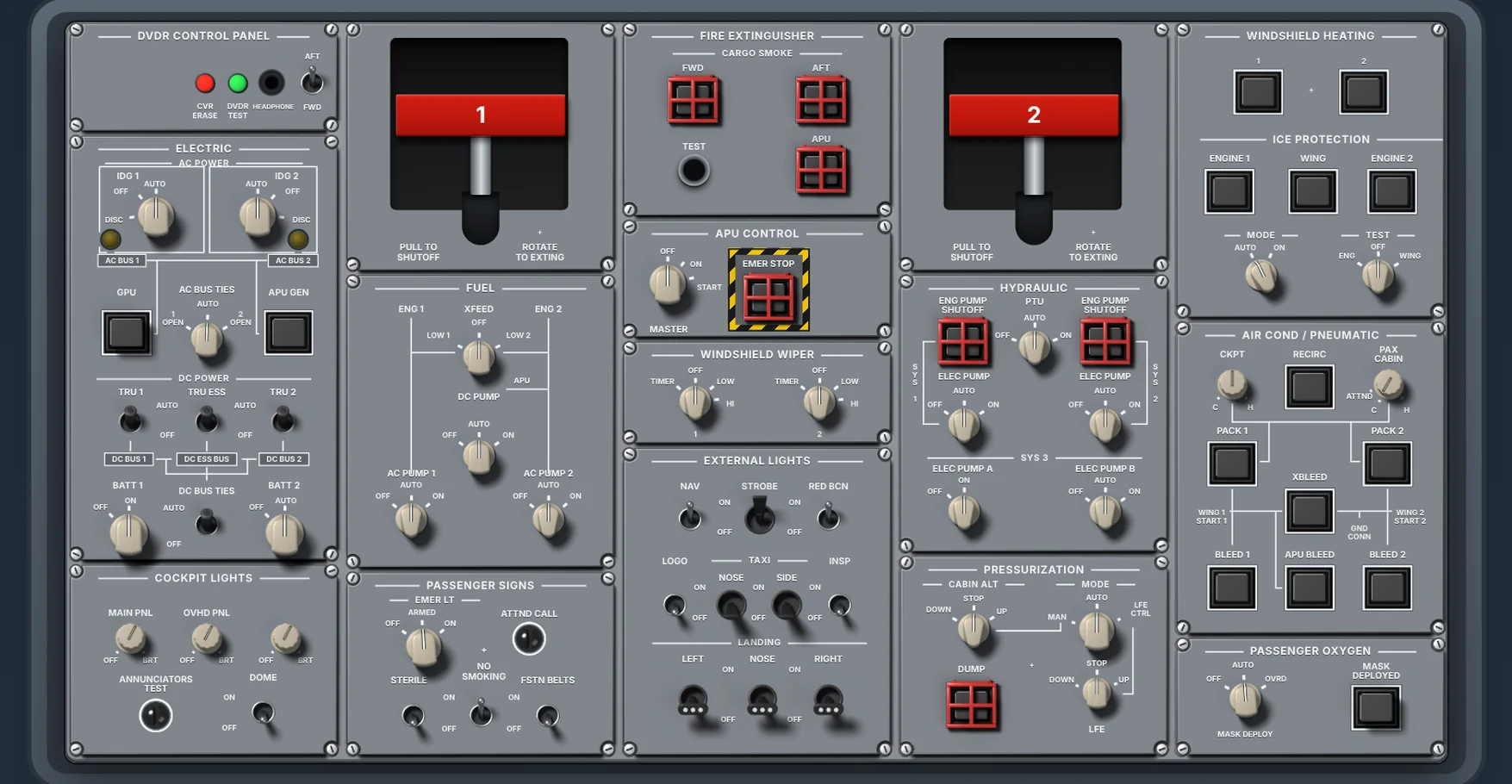
Spend a few short sessions just learning where things are: overhead, main panel, glareshield, pedestal. You don’t need to know what every switch does, only where it is and what it is called. When the electrical lesson starts, you will connect it to a place in the cockpit instead of to a page in a handout.
- Draw the overhead from memory, block by block, and compare it with the picture. Repeat until you get it right.
- Build a list of acronyms: IDG, TRU, APU, EICAS, CAS, MCDU, FMA, PFD, MFD. Knowing the vocabulary removes half the fatigue of the lessons.
- Find out early which variant, software version and options your fleet has. That defines what to study.
2. During ground school: one system at a time
For each system, use the same five questions. They work for electrical, fuel, hydraulics, pneumatics and pressurization, ice protection, APU, engines and flight controls:
- Sources: where do the power, fuel, pressure or air come from?
- Distribution: where does it go, and who feeds whom?
- Control: what does the pilot command and what is automatic?
- Indication: what shows on the synoptic page and on EICAS?
- Failure: what changes when a source drops out, and which message does the crew see?
Open the system’s synoptic page every time you study it. Watching the diagram change when a switch moves sticks better than rereading the text.
3. Limitations: learn what your operator requires
Don’t study limitations from third-party material. Take your operator’s list, turn it into flashcards and review it in short sessions every day. Group by theme (weights, speeds, engines, systems) and, for every number, also know when it matters. A number memorized without context disappears on the first sim day.
4. Flows and cold and dark
Flows are the physical sequence the crew follows in the cockpit in each phase. They have to come out without reading. Practice your operator’s flow with a picture of the cockpit, then with your eyes closed pointing at each panel, then out loud. Setting up from cold and dark is the best school: you watch the airplane wake up system by system. We explain the general logic in E-Jet cold and dark.
5. FMS and automation
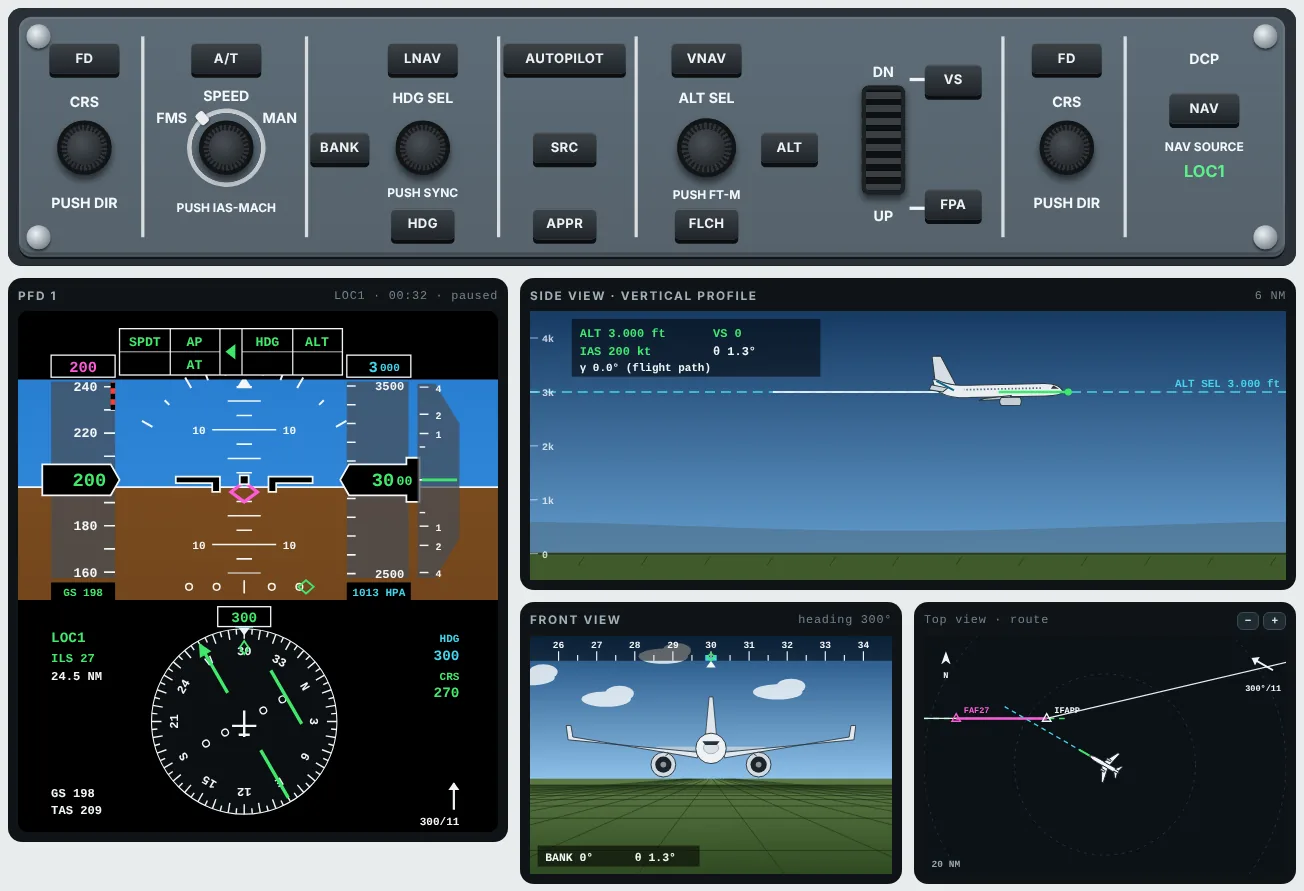
FMS setup must be automatic before the first sim session. Practice the full flow until the page sequence comes without thinking: see the walkthroughs in How to set up the E175 FMS and, for the E2, E2 MCDU step by step. For automation, know which mode each button arms or engages and how it shows on the FMA. Most autopilot surprises in training come from not reading the FMA.
6. Non-normals with the QRH
In the sim, a failure is not a memory test, it is a method test: recognize the message, stabilize the airplane, share the tasks, find the right procedure and run it with cross-checks. Practice that before:
- Know which items your operator requires from memory and which are read and done.
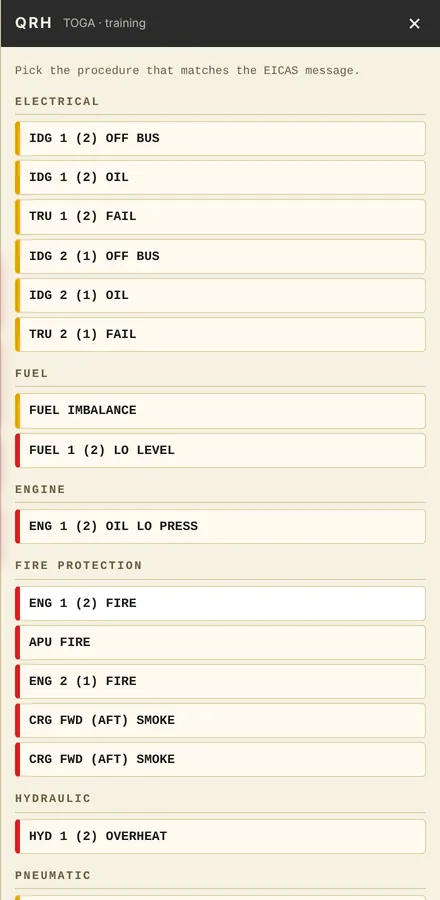
- From the EICAS message, find the right QRH procedure without hesitating.
- Practice reading out loud, with the other pilot confirming every critical action.
- After the procedure, think through the consequences for the rest of the flight: landing, fuel, performance.
7. Between sim sessions
After each session, write down what slowed you down: a switch you searched for, an FMS page you couldn’t find, a callout you forgot. Before the next session, rehearse exactly that. This short loop is worth more than rereading the whole manual.
E1 or E2?
The method is the same. The E2 has larger displays, full fly-by-wire flight controls and other updated systems; E1 pilots go through differences training. See the summary in E-Jet E1 vs E2: the cockpit differences that matter, and the short plan in How to study for the E-Jet E2 type rating.
Frequently asked questions
How long before the course should I start studying?
There is no rule. What helps most is arriving at ground school knowing the cockpit layout and vocabulary, and at the sim with flows and the FMS practiced.
Can I study limitations from material on the internet?
No. Limitations and procedures come from your operator’s and training center’s manuals. Third-party material may be outdated or for another version.
What trips students up most in the E-Jet sim?
In my instructing experience, lack of fluency: searching for switches, getting lost in the FMS and not reading the FMA. All of that can be practiced beforehand.
Does practicing at home replace the sim?
No. Browser trainers are for familiarization and repetition. They free up sim time for what only the sim can teach.
Flying the E2? See the E-Jet E2 collection →
Sources
- ICAO. Doc 9995, Manual of Evidence-based Training.
- FAA. Advisory Circular AC 120-71B, Standard Operating Procedures and Pilot Monitoring Duties for Flight Deck Crewmembers.
- FAA. Advanced Avionics Handbook (FAA-H-8083-6).